What are you most proud of in your block presentation and/or your senior project? Why?
(2) Questions to Consider
a. What assessment would you give yourself on your block presentation (self-assessment)?
P
b. What assessment would you give yourself on your overall senior project (self-assessment)?
AP+ or P
(3) What worked for you in your senior project?
I think what worked for my senior project was the fact that I really enjoy math and physics so learning about aerodynamics was an enjoyable experience. My topic also pertains to rockets and airplanes all of which are things I have been very interested in since I was a kid.
(4) (What didn't work) If you had a time machine, what would you have done differently to improve your senior project if you could go back in time?
What didn't work was finding a mentor in this specific field. As a result, if I could go back, I probably would have either chose an easier topic to find a mentor in or email any and everyone I could to try and get a mentor at this time.
What didn't work was finding a mentor in this specific field. As a result, if I could go back, I probably would have either chose an easier topic to find a mentor in or email any and everyone I could to try and get a mentor at this time.
(5) Finding Value
My senior project has helped in my future endeavors a lot. Currently, I am going to CSU Long Beach to study aerospace engineering, so, as a result, I have been able to get a feel and understanding of the basics of what I am going to be learning. This also helped me decide which focus of aerospace engineering I want to go into. My whole senior project has been on airplanes, and this caused me to realize how much more enjoyment I get out of the rockets and space side of this over the airplanes, not to say I don't like this, it just does not peak my interest as much. It also has helped me understand the best ways to approach professionals from out of nowhere and made me a lot less afraid of being told no. The worst that can happen when you ask is you get a no. All of this I plan on using to get ahead of the other engineers at my university so I can be more competitive in the rough job market.
My senior project has helped in my future endeavors a lot. Currently, I am going to CSU Long Beach to study aerospace engineering, so, as a result, I have been able to get a feel and understanding of the basics of what I am going to be learning. This also helped me decide which focus of aerospace engineering I want to go into. My whole senior project has been on airplanes, and this caused me to realize how much more enjoyment I get out of the rockets and space side of this over the airplanes, not to say I don't like this, it just does not peak my interest as much. It also has helped me understand the best ways to approach professionals from out of nowhere and made me a lot less afraid of being told no. The worst that can happen when you ask is you get a no. All of this I plan on using to get ahead of the other engineers at my university so I can be more competitive in the rough job market.

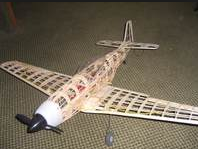


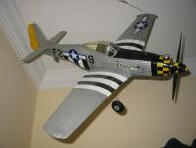

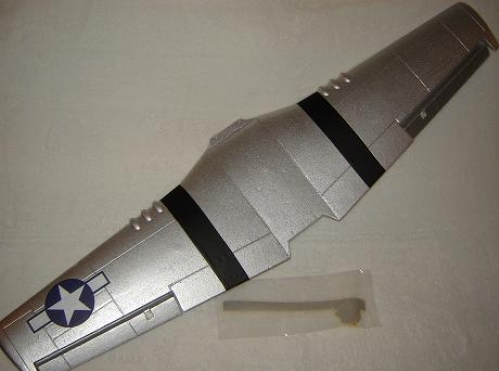
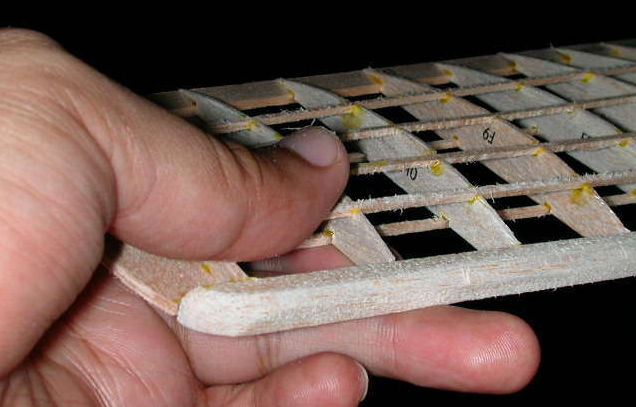



 I encountered many different varieties to choose from, all of which had different affects on the planes turning, or roll. Since I did not want to get fancy, I decided on an airfoil known as NACA(National Advisory Committee for Aerodynamics) 0015. The NACA airfoils are followed by 4 numbers. The first two decide whether or not there is any camber on the airfoil, like the one above. To make it easier and simpler on myself, I chose one without camber. Camber, by the way, is the symmetry between the top and bottom half of the airfoil. Since NACA 0015 has none, it is considered symmetrical. After second pair of numbers determines the width of the airfoil at the thickest point. Since the number is 15, that means at the max point, the airfoil is 15% of the chord length thick. (NACA 0015 Pictured below)