What is the best way to decrease drag and increase fuel economy in aircraft?
Showing posts with label Independent Component. Show all posts

Sunday, April 26, 2015

Blog 19: Independent Component 2

LITERAL

(a)  I, Kade Peich, affirm that I completed my independent component which represents 30 hours of work.
(b) My first interviewee was one source that helped me complete this. This is mainly because he recommended I look into model aircraft if I want to become an aerospace engineer, so it gave me the idea for this project. The other main source I used to complete this project was Paul K. Guillow Inc.'s FAQ page because there I was able to answer and understand many of the problems and questions I had while constructing.
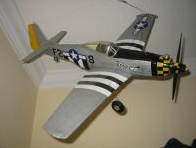
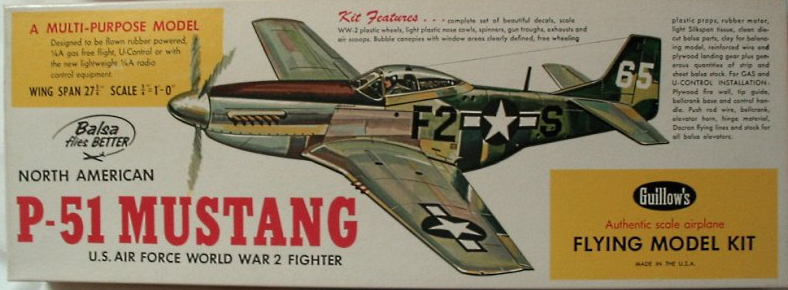
(d) For my 30 hours, I finished constructing a Guillow's model P-51 Mustang. It is a balsa wood model aircraft to the scale of 3/4 of an inch for every foot. Its total wingspan is 27.75 inches. It required many hours of gluing and cutting and following plans to construct.

INTERPRETIVE

My aircraft required a great deal of precision, time and understanding to complete. I had to look at plans for all aspects of an aircraft. From there, I had to use the provided parts to construct what I was shown in the plans. This was not very easy, but after awhile it was better. I had to glue many small wood pieces together, then clamp them there for a while to dry. I even spent a good amount of time researching the parts and skill I would need to convert it to a flyable model.
   Provide evidence (photos, transcript, art work, videos, etc) of the 30 hours of work.
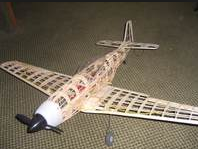
Pre details, structure done

Just some of the plans I used

Most of the parts scattered on my bed

Me with all of the stuff before I started building.


Finished product
APPLIED

This component helped me answer my EQ because it exposed me to the design principles of basic aircraft. From this I am able to compare it with modern day aircraft to see how the aerodynamics have improved to help fuel-efficiency and see just how much more they can improve. It also demonstrated how important the design of an aircraft is, even more so then the design of the engine that pushes it forward. I was able to see this because I had to build it myself hands on and realize the precision that went into the design. For example, if I misused one of the airfoils when creating the wings, it could have resulted in catastrophic failure had I ever gotten this thing to fly. Ultimately, through having to use designs, I am able to see how impactful design is on functionality, which leans towards my first answer as the most important answer because it is focused on changing the whole design of the aircraft to improve fuel-efficiency. 

Wednesday, February 11, 2015

Blog 15: Independent Component 2 Approval

1. For my 30 hours, I plan to finish the construction of my RC plane. Since for the first time I was able to get the wings done on the plane, this time I will finish constructing the body and add the motor and propellers to try and get it to fly.

2. To meet the 30 hours of work I will have to manually construct the whole body of the plane, if it is anything like the wings, it will take a lot of precision and time to finish the body. Another big part of it will be figuring out how I can convert it into a flyable RC craft. This will require a lot of research and effort to get it done. 

3. This will help me explore my topic more in depth because I will start learning actual applications of the aerodynamics I have been learning. This will also help me understand more the concept of thrust and how motors and engine give the forward motion that allows the airplanes to produce lift and fly.

Thursday, February 5, 2015

Independent Component 1

LITERAL

(a)
 “I, Kade Peich, affirm that I completed my independent component which represents 31 hours of work.”

(b) Well, my first interviewee recommended I look into RC planes and such to get a better understanding of aerospace engineering. This led me to watch lots of YouTube videos, especially from a channel called Jason Anderson, but I ultimately did not have one particular book or source that I followed. If I had to choose it would be the YouTube channel Jason Anderson, however.

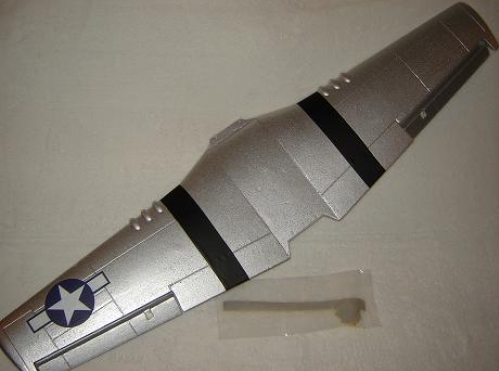
(d) I completed the acquisition of the P51 Mustang prelasercut balsa wood kit, despite my original plans to build from scratch which proved near impossible for the style I wanted to achieve. After acquiring it and researching all about airfoils and their aerodynamic importance, I began to piece together the wings of the craft. This allowed me to visually understand the structure of aircraft wings, which are the most important part of the craft and how they fly. This gave me a much better understanding of how the airfoil's affect wing shape and how that affects the aircraft. 

INTERPRETIVE 

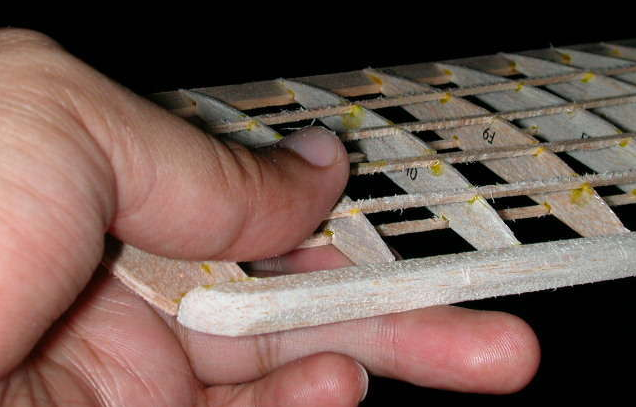
My work was very related to my senior project because many of the few engineers I have talked to noted that RC is a very good way to get introduced to the basic mechanics of engineering. By creating this wing I have began to understand just how important the wing shape is and how it is manipulated at the structural level before becoming a full structure. I have also learned that they are often hollow and this allows for a reduction in other aerodynamic forces, like weight. Ultimately, this project was very tedious because of all the set backs I had, and the wing is not one solid piece it is hundreds of little wood pieces connected together then covered (you can kinda see it in one of the pictures) and requires a lot of precision gluing. It also has given me a glimpse of what to expect in an aeronautical industry.
        (This is actually my cousins hand, too hard a picture to take one handed but it looks cool)
(The glue I came to love)
(My workstation)

APPLIED

This helped me understand the foundation of my topic better because, as I have said earlier, it showed me the basic structure of wings. It led me to understand how important the wing's are in creating a solid aircraft that can be used commercially or privately. Like for example, I have been reading a lot about Bernoulli's principle and how the shape of an airfoil affects this, but with this I got to actually see small scale airfoils and how they are used to shape a wing to produce lift. Basically, all of the things I have been learning about wings I got to apply by creating a small scale one.

Wednesday, October 1, 2014

Blog 7: Independent Component 1 Approval

1. For my 30 hours, I plan to design, construct and possibly fly a remote control airplane. By doing this, I will learn the basics of aircraft design, as well as, put into practice some of the ideas and concepts I have been learning about in my research. It will also allow me to get more hands on with my project and provide me with a, hopefully, fun way to better understand my topic. Ultimately, to complete it, I will continue to research and get insight into basic aircraft design.

2. To provide proof/evidence of my 30 hours of work, I will continually take pictures as I work through all stages of the process. Along with this, I hope to have a finished project that can be presentable. If flyable, I may also produce a video with footage of it flying.

3. By designing/constructing a small scale aircraft, I am ultimately putting to practice everything I have been researching. It is a much more hands on approach that will test my knowledge on the matters and force me to learn much more. This is basically a much simplified, basic and doable aerospace engineering activity. My first interviewee also suggested that I look in to RC craft to help me learn more in depth on aerodynamics, so I am sure it will provide me with a lot of information.