What is the best way to decrease drag and increase fuel economy in aircraft?

Thursday, February 5, 2015

Independent Component 1

LITERAL

(a)
 “I, Kade Peich, affirm that I completed my independent component which represents 31 hours of work.”

(b) Well, my first interviewee recommended I look into RC planes and such to get a better understanding of aerospace engineering. This led me to watch lots of YouTube videos, especially from a channel called Jason Anderson, but I ultimately did not have one particular book or source that I followed. If I had to choose it would be the YouTube channel Jason Anderson, however.

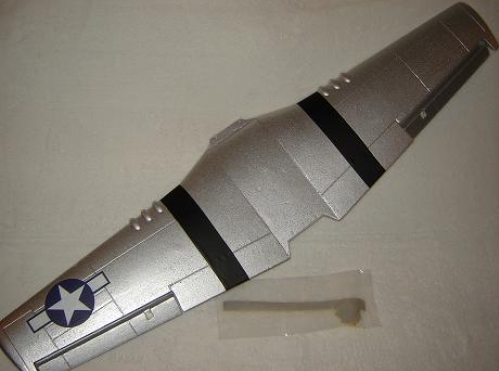
(d) I completed the acquisition of the P51 Mustang prelasercut balsa wood kit, despite my original plans to build from scratch which proved near impossible for the style I wanted to achieve. After acquiring it and researching all about airfoils and their aerodynamic importance, I began to piece together the wings of the craft. This allowed me to visually understand the structure of aircraft wings, which are the most important part of the craft and how they fly. This gave me a much better understanding of how the airfoil's affect wing shape and how that affects the aircraft. 

INTERPRETIVE 

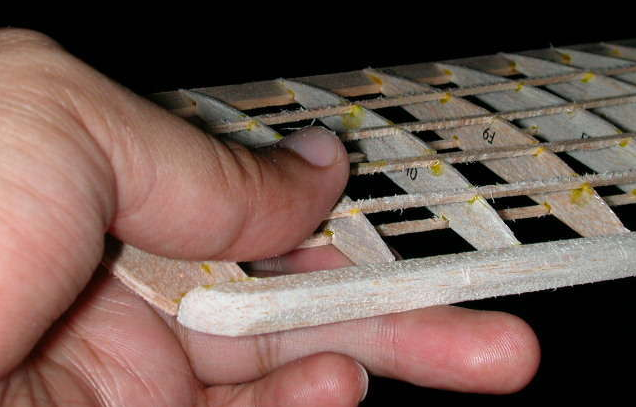
My work was very related to my senior project because many of the few engineers I have talked to noted that RC is a very good way to get introduced to the basic mechanics of engineering. By creating this wing I have began to understand just how important the wing shape is and how it is manipulated at the structural level before becoming a full structure. I have also learned that they are often hollow and this allows for a reduction in other aerodynamic forces, like weight. Ultimately, this project was very tedious because of all the set backs I had, and the wing is not one solid piece it is hundreds of little wood pieces connected together then covered (you can kinda see it in one of the pictures) and requires a lot of precision gluing. It also has given me a glimpse of what to expect in an aeronautical industry.
        (This is actually my cousins hand, too hard a picture to take one handed but it looks cool)
(The glue I came to love)
(My workstation)
APPLIED

This helped me understand the foundation of my topic better because, as I have said earlier, it showed me the basic structure of wings. It led me to understand how important the wing's are in creating a solid aircraft that can be used commercially or privately. Like for example, I have been reading a lot about Bernoulli's principle and how the shape of an airfoil affects this, but with this I got to actually see small scale airfoils and how they are used to shape a wing to produce lift. Basically, all of the things I have been learning about wings I got to apply by creating a small scale one.

Saturday, January 31, 2015

January Blog Post

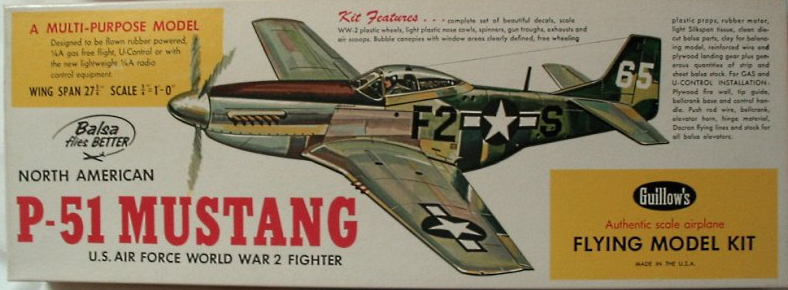
This month for my Senior project I have mostly been working on how I am going to complete my independent component. I have gone searching for supplies and plans, but many are not turning out to be what I need them to be. I have purchased a bunch of balsa wood in hopes that I would be able to easily form it into the airfoil to create a wing. Turns out, it is much to hard to precisely cut this with the means I have at my availability. I also have come across a great many plans that I could use, but without an expensive laser cutter to cut out parts to scale, building an airplane from a schematic is very difficult. Precision is key. As a result, I have decided to purchase a kit that comes with the parts pre-laser cut, but requires a great deal of time to precisely connect and put together. I had hoped to build it completely from scratch, but because I knew nothing of working with this before hand, I am incapable of creating it as such. Making the craft fly is also going to be difficult, but if I can get a motor and hook it up right, it should be able to get off the ground with the right airfoil structure. (When complete I plan for it to look similar to this WW2 P52 mustang like below)

Thursday, January 29, 2015

Lesson 2 Reflection

1.What are you most proud of in your Lesson 2 Presentation and why?

I am most proud of my ability to communicate what I feel is the most basic aerodynamics in a fairly understandable manner for the audience.

2. a. What assessment would you give yourself on your Lesson 2 Presentation (self-assessment)?

 P

b. Explain why you deserve that grade using evidence from the Lesson 2 component contract.

I feel I deserve a P because I fulfilled all of the requirements at the top of the contract to receive a P, and I did so adequately, especially the quality research portion because the majority of my presentation was factual information on aerodynamics.

3. What worked for you in your Lesson 2?

What worked for me was my ability to have enough information to talk for at least the required time, and maybe more.

4. What didn't work? If you had a time machine, what would you have done differently to improve your Lesson 2?

If I had my time machine, I would have rehearsed my presentation completely so there were less awkward pauses throughout the presentation.

5. What do you think your answer #2 is going to be?

I think my second answer will have something to do with the fuel-efficient features that have made the Synergy aircraft such an efficient aircraft.

Friday, January 9, 2015

Blog 12: Mentorship 12 Hours Check

1. Where are you doing your mentorship?

Recently, I have been told by an employee for a aerospace manufacturing company that produces mechanical devices for military aircraft and space that I will be able to mentor there.

2. Who is your contact?

My contact will be Mario Trujillo, we have yet to meet however.

3. How many total hours have you done (total hours should be reflected in your mentorship log located on the right hand side of your blog like your WB)?

I have done no hours besides the summer ones due to the fact that my previous planned mentor told me I was no longer allowed to mentor under him or his company.

4. Summarize the 10 hours of service you did.

N/A.

Tuesday, January 6, 2015

Blog 11: Holiday Project Update

1. It is important to consistently work on your senior project, whether it is break or we are in school. What did you do over the break with your senior project?

     Over the break I began searching for possible designs and airfoil shapes for the aircraft I hope to construct for my independent component. I also began to get a list of the materials I will need, aswell as the tools I will need.

2. What was the most important thing you learned from what you did, and why? What was the source of what you learned?

    I learned the basics of RC plane design, like my first interviewee suggested I do, and this was pretty important because an RC craft reacts and performs similar to large scale craft, minus the heavy loads and heavy thrust. I learned most of what I did from a website called Stormthecastle.com.

3. If you were going to do a 10 question interview on questions related to answers for your EQ, who would you talk to and why?

    If I could, I would like to interview my first interviewee again because he is the most heavily involved in aircraft design and works with a lot of innovative designs and technology so he would probably have a better idea of things that can provide increased fuel-efficiency. 

Wednesday, November 12, 2014

Blog 10: EQ


1. Review this. Confirm by stating "I reviewed the rule of three for writing an EQ."

Essential Question
Once a topic is chosen, the student will develop a working essential question. The purpose of the working essential question is to help the student build a strong foundation of research which will allow him or her to create an essential question that encourages depth and rigor in the chosen topic. An essential question must:

Provide a framework for studies (It calls for breadth and depth of research, Is not a yes/no question)
Take a stance (It allows you to argue some point, Cannot be a recitation of facts or a list)
Format (It is specific, The wording makes sense)

I reviewed the rule of three for writing an EQ. 

2. Review the following EQs and

Tell us if each meets the rule of three.
Tell why they do or don't.

a. What is the most important factor in healthy weight loss?
  • Yes because it requires thorough research to determine the most important factor, and that factor is not the same for everyone, so it requires you to take a stance. Its wording also is very specific, not just being healthy or losing weight but losing weight healthily. 

b. What is most important to securing a conviction in a criminal investigation?
  • No because it is asking for what is the most important which means it will most likely just be facts about most used information in securing a conviction.
c. What is most important in creating a hairstyle that best satisfies a customer?
  • No because, like the last, it wants to what is the most important in creating a hairstyle which is not very clear, the most important what? It also implies an easily obtainable answer, that probably can't take a stance with.
d. How can an anesthesiologist best treat chronic pain?
  • No because this is something that does not really allow you to take a stance, it either is or is not the best way to treat the pain. 

3. Based on your review of the rule of 3 and your experience with assessing four EQs, please write another draft EQ for your senior project. The senior team will be meeting with students shortly for EQ revision and approval; you are expected to bring your research notebook to that meeting with your EQ draft written inside in pencil.

  • How can one best change the basic design of an aircraft to improve fuel-efficiency by reducing drag and weight?

Tuesday, November 4, 2014

Blog 9: Lesson 1 Reflection


1. Positive Statement

a. What are you most proud of in your Lesson 1 Presentation and why?

I am pretty proud of my lessons in aerodynamics because I thought I did a fairly good job at explaining it in basic terms.

2. Questions to Consider

a. What assessment would you give yourself on your Lesson 1 Presentation (self-assessment)?

P

b. Explain why you deserve that grade using evidence from the Lesson 1 component contract.


I feel like I executed my lesson pretty well and met all the requirements outlined in the rubric.

3. What worked for you in your Lesson 1?


What worked for me during my first lesson was my hook activity because I told everyone to make a paper airplane... oh excuse me... a paper "glider" from a simple piece of paper. I think it was entertaining to the audience.

4. (What didn't work) If you had a time machine, what would you have done differently to improve your Lesson 1?

If i had a time machine I would practice my presentation more before hand so I knew at least a decent idea of what I was going to say and how long it was going to take.