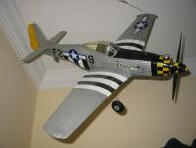
What is the best way to decrease drag and increase fuel economy in aircraft?

Wednesday, May 6, 2015

Exit Interview


(1) What is your essential question, and what are your answers? What is your best answer and why?

What is the best way to decrease drag and increase fuel economy in aircraft?
  • Blended-wing body
  • Geared Turbofan Engine
  • Adaptive Compliant Trailing Edge "morphing wing" Technology
My best answer is the geared turbofan engine.

(2) What process did you take to arrive at this answer?

To arrive at this answer I first had to understand how aircraft can become more fuel-efficient. Once I understood the aerodynamics and mechanics behind ways airplanes can become more fuel-efficient, I started encountering all of my answers. After I had discovered all of my answers, I narrowed it down to one through the simple idea of which one is the most practical and easy to apply. Geared turbofan engines were because all you have to do is replace current jet engines with these ones.

(3) What problems did you face? How did you resolve them?

I did not encounter many problems. One problem I did have was finding a mentor in my field. A lot of aerospace engineers work for large companies like Northrop Grumman and Boeing and the things being worked on there are often in coordination with the military and government and, as a result, require lots of clearance and security making it impossible to mentor there. I resolved this by looking for mentors in similar engineering fields and have thus been able to get most of my mentorship done.

(4) What are the two most significant sources you used to answer your essential question and why?

My two most significant sources would have to be the NASA Glenn Research Center fact pages and the Flying Engineer website. The NASA sources provided me with nearly all of my knowledge on aerodynamics and anything related to aircraft design and function, and, as a result, led to me better understanding why certain things would or would not answer my essential question. The Flying Engineer was very significant because they have many technical articles and their article on my best answer served as a large bank of information for understanding how it works and what it does and why it is so practical.


Thursday, April 30, 2015

April Blog Post

This month has been a lot of reacquainting myself with earlier research. Since we have been working on all of our findings and such for the iSearch paper, I needed to brush up on the specific details of my first answer. I also did a lot more research on some basic aerodynamics and such so I can help better understand my answers for my presentation. Besides that, not many interesting things have happened. However, I did almost find a new mentorship/summer internship at an aerospace manufacturing company. They said if I am able to go there, they will count my time there as a long interview to consider hiring me part time as I am in college. This was very exciting news and I hope it pans out, but for the moment it is on hold because my contact with them lost his brother in the midst of all this. I am not going to pressure for a response, and wait it out.

Sunday, April 26, 2015

Blog 19: Independent Component 2

LITERAL

(a)  I, Kade Peich, affirm that I completed my independent component which represents 30 hours of work.
(b) My first interviewee was one source that helped me complete this. This is mainly because he recommended I look into model aircraft if I want to become an aerospace engineer, so it gave me the idea for this project. The other main source I used to complete this project was Paul K. Guillow Inc.'s FAQ page because there I was able to answer and understand many of the problems and questions I had while constructing.
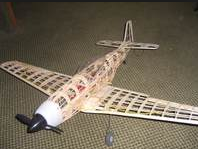
(d) For my 30 hours, I finished constructing a Guillow's model P-51 Mustang. It is a balsa wood model aircraft to the scale of 3/4 of an inch for every foot. Its total wingspan is 27.75 inches. It required many hours of gluing and cutting and following plans to construct.

INTERPRETIVE

My aircraft required a great deal of precision, time and understanding to complete. I had to look at plans for all aspects of an aircraft. From there, I had to use the provided parts to construct what I was shown in the plans. This was not very easy, but after awhile it was better. I had to glue many small wood pieces together, then clamp them there for a while to dry. I even spent a good amount of time researching the parts and skill I would need to convert it to a flyable model.
   Provide evidence (photos, transcript, art work, videos, etc) of the 30 hours of work.
Pre details, structure done

Just some of the plans I used

Most of the parts scattered on my bed

Me with all of the stuff before I started building.


Finished product
APPLIED

This component helped me answer my EQ because it exposed me to the design principles of basic aircraft. From this I am able to compare it with modern day aircraft to see how the aerodynamics have improved to help fuel-efficiency and see just how much more they can improve. It also demonstrated how important the design of an aircraft is, even more so then the design of the engine that pushes it forward. I was able to see this because I had to build it myself hands on and realize the precision that went into the design. For example, if I misused one of the airfoils when creating the wings, it could have resulted in catastrophic failure had I ever gotten this thing to fly. Ultimately, through having to use designs, I am able to see how impactful design is on functionality, which leans towards my first answer as the most important answer because it is focused on changing the whole design of the aircraft to improve fuel-efficiency. 

Tuesday, March 31, 2015

March Additional Blog Post

This month I came across a few interesting aircraft and spacecraft designs while researching. They do not directly relate to my EQ but they were very informative.
One of the aircraft I looked into is called Leading Edge Asynchronous Propeller Technology project (LEAPTech). Basically NASA has taken a wing and strapped 18 propellers onto it. Most aircraft only have one or two, or at the most four. By putting it on a carbon composite wing they hope to help produce more lift. Most of our current aircraft use the engines producing forward lift to in turn cause the airflow to produce lift on the wings. But with this, each of the propellers will directly blow air onto the wings to produce lift. Each individual propeller can also be adjusted to have a smooth and efficient fly experience. This technology will also allow aircraft to take off sooner because it will not need speed to get enough lift to get off and stay off the ground. Ultimately this aircraft has some strong hopes for the aircraft industry and I may look into it more for my senior project as it has some fuel-efficiency benefits. I'll definitely keep my eye on its development as it is only in the ground testing stages.

Wednesday, March 11, 2015

Blog 18: Interview 4 Prep

1. How would you define drag?
2. How would you define aircraft fuel-efficiency?
3. What do you feel is the most impactful thing in aircraft fuel-efficiency?
4. How important do you feel it is to reduce drag?
5. What are some ways to do so?
6. Have you heard of any interesting concepts or ideas to do so?
7. Where you work, do you ever consider fuel-efficiency when designing?
8. What about after it is built or during construction?
9. Have you heard of the blended wing body design?
10. Do you feel it is a better design for commercial aircraft?
11. Have you heard of the synergy aircraft?
12. If so, can you explain how the double bobtail works exactly?
13. Do you think this aircraft has any chance of success at becoming a norm?
14. Do you think aircraft fuel-efficiency should be something an aerospace engineer should greatly consider?
15. What do you feel is the most important thing to factor in when designing?
16. Do you think the current design standard for commercial aircraft will remain how it is?
17. What kind of aircraft do you or your company design?
18. Do you frequently implement new designs when creating a new aircraft?
19. Are you concerned with the current standard of fuel efficiency in aircraft?
20. What do you think should be changed in most aircraft designs?

Thursday, March 5, 2015

Blog 17: Third Answer


EQ: What is the best way to decrease drag and increase fuel economy in aircraft?

Answer 3: The best way to improve fuel economy while decreasing drag is through the implementation and use of geared turbofan engines.

Three Details:
The research source (s) to support your details and answer
Concluding Sentence

Saturday, February 28, 2015

February Additional Blog Post

This month I haven't done too much revolving around my senior project. I did start the construction of the rest of my airplane. It is what I am doing for the second component. The rest of the aircraft is basically just more complex forms of how you constructed the wings. There is lots if aesthetics that also need to be installed like the cockpit and decals. This plane is also designed to be adapted into an rc aircraft I recently discovered. So I am trying to find a way to get ahold of the necessary components to get it powered and flyable. I would post pictures but I am in the middle of the desert right now riding motorcycles and I barely have enough reception to post this.